🐎 Horse
Type: Theriotype (real, earthly animal)
By the Inner Therian team · Last updated October 10, 2026
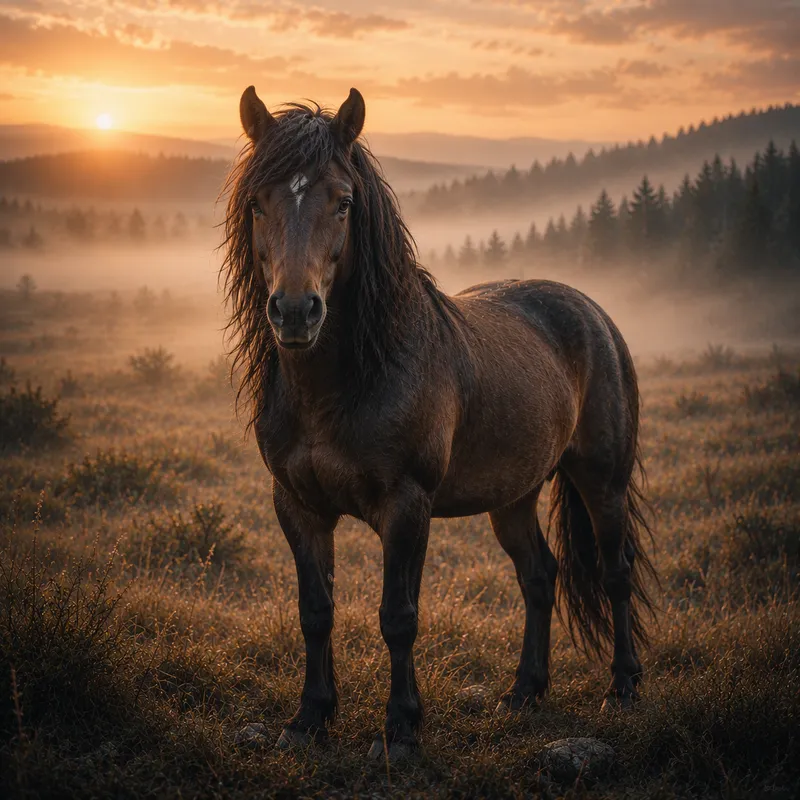
Horse therians are free-spirited, strong, and bonded to their herd. Horses combine power with a deep social and emotional sensitivity — and horse therians often crave open space, movement, and trusted companionship in equal measure.
Horse therians frequently describe a need to run, a strong but gentle strength, and a finely tuned read on the emotions of those around them. Herd bonds matter, and many feel restless when confined or isolated.
The Real Horse: A Prey Animal Built for Distance
Horses evolved on open grasslands, where being able to see danger early and outrun it decided who survived. Almost everything about them comes from that. Their eyes sit on the sides of the head, so they can see nearly all the way around themselves. The only blind spots are directly in front of the nose and directly behind the tail, which is why horse people learn never to walk up behind a horse without speaking first.
Their ears turn independently, so a horse can listen to two different things at once, and they show mood very clearly. Ears pricked forward mean attention, ears flicking back and forth mean they are listening around, and ears pinned flat back mean irritation. Horses graze for most of the day, often well over half of it, eating small amounts of forage almost constantly instead of a few large meals.
Horses can doze standing up because a system of tendons and ligaments in their legs, often called the stay apparatus, locks the joints so they don't fall over. They still need to lie down now and then for deep sleep, and they usually only do that when another herd member is awake and keeping watch.
Herd Life and the Prey-Animal Mind
Feral and free-roaming horses usually live in small family bands. A band is often a stallion, several mares and their young, and an experienced mare often decides when the group moves and where it goes. Young males who leave their band often form bachelor groups. Bonds within a band are real and lasting: horses groom each other with their teeth, stand head-to-tail to swat flies off each other's faces, and get upset when separated from a close companion.
For a prey animal, safety comes from the group and from being able to run. That is the key to how many horse therians describe their inner world:
- Safety in numbers. Being alone can feel exposed and unsettling, not just lonely. Many horse therians say they relax properly only when trusted people are nearby.
- Startle first, think second. A sudden noise or movement can bring on a strong jolt of "go" before the thinking brain catches up.
- Reading the herd. Horses pick up on small changes in body language. Many horse therians describe feeling the mood of a room shift before anyone says anything.
- Movement as relief. Running, or even fast walking, can feel like letting out pressure that has been building up.
Prey-animal awareness is a different thing from an anxiety disorder, although the two can exist together. If your startle response or fear of being alone is causing you real distress, that's worth talking through with a trusted adult or a professional. Getting support for distress doesn't take anything away from your identity.
Everyday Life as a Horse Therian
Horse therians often describe shifts that show up in very physical, everyday ways. Common examples include:
- A phantom tail that swishes when they're annoyed, or phantom ears that pin back during an argument.
- A pull to stamp, paw at the ground, or shift their weight from one "hoof" to the other when impatient.
- Strong preferences about personal space, especially not wanting anyone to come up behind them unannounced.
- Grazing-style eating: snacking little and often feels more natural than three big meals.
- Feeling calmer outdoors with a wide view than in small, enclosed rooms.
Some horse therians practice quadrobics or enjoy running and jumping on all fours. If that's you, warm up your wrists and shoulders first, build up slowly, and stop if anything hurts. Horses carry most of their weight on their front legs, and human wrists aren't built to do that for long.
Horse, Deer, or Something Else?
Horses and deer are both large, hoofed prey animals, so their shifts can feel similar. Some differences many therians notice:
- Response to threat. Deer tend to freeze and then bolt to cover. Horses tend to bunch together and run across open ground as a group. Ask yourself whether your instinct is to hide or to run with others.
- Social need. Horses are strongly herd-bound all year round. Many deer species spend much of the year in small or loose groups.
- Body sense. Horse phantom shifts often involve a long neck, a heavy body, a single hoof on each leg and a long, full tail. Deer shifts more often include antlers, a lighter frame and a short tail.
Some people feel connected to equines in general (horses, zebras, donkeys) more than to any single species. If that sounds like you, look at the cladotherian page.
Questions to Sit With
- When you picture safety, are you alone in a den, or standing in an open field with others close by?
- Does the urge to run feel like escape, or like joy? (For many horse therians it's both.)
- Do you notice phantom sensations in your neck, tail, or feet when you're emotional?
- Is your love of horses about wanting to be with them, or a feeling that you are one? The first one may point toward being otherhearted.
🌟 Signs the Horse Might Be Your Theriotype
- You crave open space and the freedom to move
- You feel both powerful and emotionally sensitive
- You bond closely with a trusted "herd"
- You get restless when confined or isolated
- You experience phantom shifts of a tail, hooves, or large ears
🌀 Common Shifts
Common shifts include the urge to run (mental shift), phantom shifts (tail, ears), and sensitivity-driven emotional shifts. Learn more on our shifts guide & quiz.
💚 A Note on Respect
Your theriotype isn't a choice, a phase, or a costume — and only you can truly know it. A quiz like ours can point you toward animals worth reflecting on, but take your time. There's no "fake" therian and no rush. If the Horse resonates, explore it gently through introspection, dreams, and community.
Horse Theriotype FAQ
Do you have to ride or own horses to be a horse therian?
No. A theriotype is about your sense of self, not access to horses. Many horse therians have never ridden, and some actually feel uncomfortable with riding because of their identity. Both are fine.
Is a horse therian the same as someone who just loves horses?
Not necessarily. Lots of people love horses deeply without identifying as one. That kinship may be otherhearted, or simply a strong interest. A horse therian feels that, in some non-physical way, they are a horse.
Can a unicorn or pegasus be a theriotype?
Not strictly. Unicorns and pegasi are mythical, so identifying as one usually falls under otherkin or theriomythic, the same as a dragon identity. A real wild or domestic horse is a theriotype.
Why do I startle so easily? Is that my theriotype?
Many horse therians link a strong startle response to prey-animal instincts. Still, if being startled leaves you anxious or upset for a long time afterward, please talk to a trusted adult or a counselor. Getting help for distress is a good idea whatever your theriotype is.
What shifts are most common for horse therians?
Many describe mental shifts centered on restlessness and the urge to run, phantom tails and ears, and heightened awareness of movement at the edges of their vision.