💞 Otherhearted
Alterhuman Identities
By the Inner Therian team · Last updated October 10, 2026
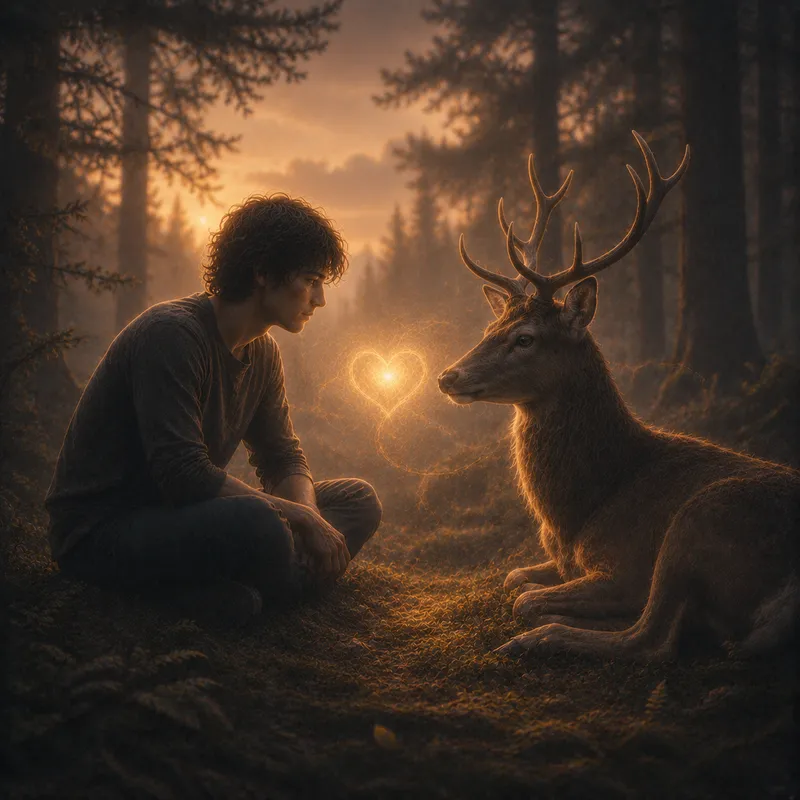
Someone who is otherhearted feels a profound kinship with an animal — like family — but does not identify as one.
It's the difference between "I love and feel deeply connected to wolves" (otherhearted) and "I am a wolf" (therian). Otherhearted is a genuine, distinct connection in its own right, not a "lesser" version of being a therian.
What being otherhearted feels like
People who describe themselves as otherhearted often talk about a bond that feels more like family than fandom. The animal isn't just a favourite; it feels like it belongs to them and they to it, in a way that's hard to put into words.
Common descriptions include:
- A sense of calm, comfort or "home" when thinking about, seeing or learning about the animal.
- Feeling personally protective of the species, sometimes grieving news about it as if it were about a relative.
- A lasting pull that has stayed steady for years, not a passing phase of interest.
- Recognising some of the animal's traits in yourself — while still feeling, clearly, that you are human.
That last point is the heart of it. The kinship is real and deep, but it's a relationship with the animal rather than an identity as the animal.
Otherhearted, therian, or simply an animal lover?
These can be tricky to tell apart, especially early on. One way to think about it is as a spectrum of closeness:
- Animal lover: "I really like foxes. They're my favourite animal." The feeling is warm but doesn't feel like part of who you are.
- Otherhearted: "Foxes feel like my kin. I'm bonded to them on a level I can't explain." It's woven into your sense of self, but as a connection.
- Therian: "I am a fox, on the inside." The animal is your identity — see our therian guide.
Nobody needs to land on a label quickly. If you're not sure where you sit, our identity quiz asks questions designed around exactly this distinction.
How it differs from a copinglink
Both otherhearted people and copinglinkers have a meaningful relationship with an animal or being, so they're sometimes mixed up. The difference is mostly about choice. A copinglink is consciously adopted, often for comfort, and it can be set down when it's no longer needed. Otherheartedness is usually described as something that was simply there — discovered rather than chosen, much like therianthropy.
Some people also mention that they avoid the phrase "spirit animal," because it comes from specific Indigenous spiritual traditions. "Otherhearted" gives non-Indigenous people a way to describe their bond without borrowing that language.
It's not a "lesser" therian
Otherhearted people sometimes worry they're "not animal enough" or that they're a watered-down therian. That isn't how the community sees it. Otherheartedness is its own experience, with its own meaning — not a stepping stone or a consolation prize.
It's also fine for your understanding to change. Some people start out calling themselves otherhearted and later realise they're therian; others move the other way after reflection. Neither shift means you got it "wrong." It just means you kept paying attention to yourself.
Ways people honour the bond
Many otherhearted people enjoy finding real-world ways to express their connection:
- Learning the animal's biology, behaviour and habitat in depth — our theriotype guides are a good starting point for many species.
- Spending time in nature, wildlife watching (from a respectful distance), or visiting sanctuaries.
- Supporting conservation for the species or its habitat.
- Creating art, writing or music inspired by the animal.
- Keeping a journal of what the bond feels like and when it feels strongest.
Whatever you do, keep the real animal's welfare first: wild animals do best when they're observed, not approached.
🌟 In Short
- You feel deep kinship WITH an animal
- You do not identify AS that animal
- It's a felt affinity, distinct from therianthropy
Otherhearted FAQ
What does otherhearted mean?
Otherhearted describes feeling a deep, lasting kinship with an animal or being — like family — without identifying as that animal. It's a connection with, rather than an identity as.
Can you be otherhearted with a mythical creature?
Yes. People describe otherhearted bonds with real animals and with mythical beings such as dragons. The key feature is the kinship, not whether the being is real.
Can I be otherhearted and therian at the same time?
Yes. A therian might identify as a wolf and also feel otherhearted toward ravens, for example. The two labels describe different relationships, so they can sit side by side.
Is otherhearted part of the alterhuman community?
It is often included under the broad alterhuman umbrella, and many therian and otherkin spaces welcome otherhearted people. See our alterhuman identities overview for how the labels fit together.
Do otherhearted people experience shifts?
Shifts are usually associated with identifying as an animal, so they're less commonly described by otherhearted people. If you regularly experience shifts into an animal headspace, it may be worth exploring whether therian fits better.