🐺 Wolf
Type: Theriotype (real, earthly animal)
By the Inner Therian team · Last updated October 10, 2026
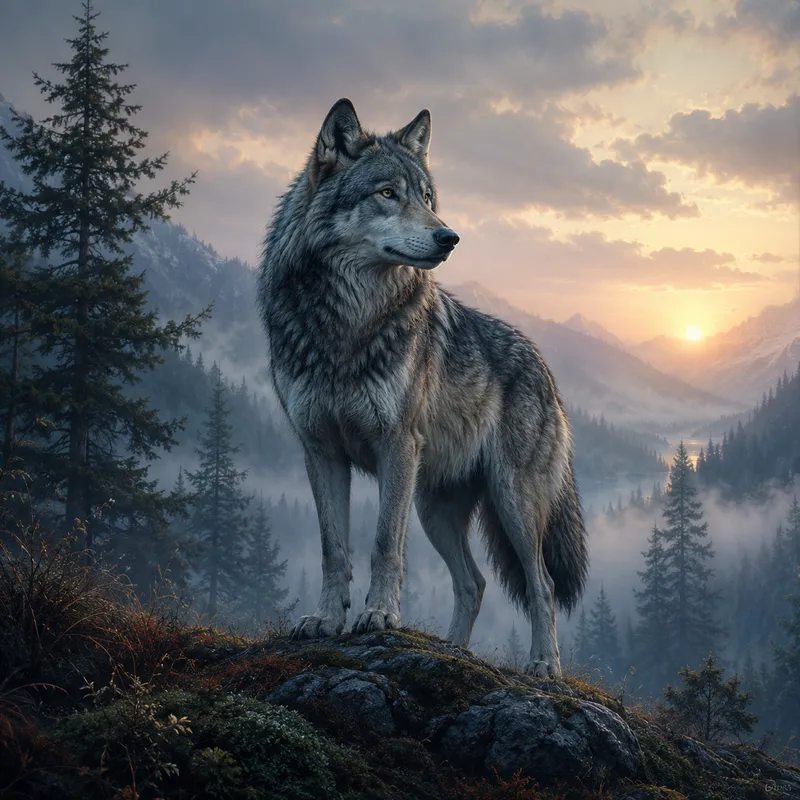
The wolf is one of the most common — and most misunderstood — theriotypes in the therian community. Wolf therians describe a deep pull toward pack, family, and belonging, paired with a quiet, enduring strength. If your sense of self is wrapped up in loyalty, social bonds, and an untamed connection to the wild, the wolf may be your theriotype.
Being a wolf therian isn't about being aggressive or "alpha" (a debunked idea even in wild wolves). Real wolf packs are families. Wolf therians often feel most themselves when they're caring for the people they love, reading group dynamics instinctively, or craving the company of a trusted few. At the same time, many feel a lone-wolf streak — comfortable in solitude and the outdoors.
The Real Gray Wolf, Briefly
The gray wolf (Canis lupus) once had one of the widest ranges of any land mammal, from the Arctic tundra to the deserts of the Middle East. Wolves are long-distance travellers: a pack's territory can cover hundreds of square miles, and wolves often cover many miles in a single day while patrolling or hunting.
A typical pack is not a gang of rivals. It is a family: a breeding pair and their offspring from the last year or few. Pups are raised by the whole group, older siblings bring food back to the den, and most young wolves eventually leave home, usually somewhere between one and three years old, to find a mate and start a pack of their own.
Their senses are built for that life. A wolf's sense of smell is vastly more sensitive than ours, their hearing picks up higher-pitched sounds than human ears can, and their eyes are tuned for movement in low light. Howling carries for miles and helps scattered family members find each other and tell neighbouring packs where the boundary lies.
Where the "Alpha Wolf" Idea Came From (and Why It Is Wrong)
The image of an "alpha" fighting its way to the top came largely from studies of unrelated captive wolves housed together in the mid-twentieth century. Strangers forced into one enclosure did squabble over rank. Wild wolves, it turned out, mostly don't, because the so-called alphas are simply the parents.
The biologist L. David Mech, whose early book helped spread the term, spent years afterward correcting it once field research on wild packs showed the family structure. Most wolf researchers now describe "breeding pair" and "offspring" rather than alpha and beta.
This matters for wolf therians. If you feel like a wolf, the instinct you are likely recognising is not dominance; it's devotion: keeping track of your people, feeding and protecting them, and feeling uneasy when someone in your circle is missing. A wolf identity is not a licence to be harsh with others, and it doesn't make anyone ranked above or below you.
What Daily Life Can Feel Like
Wolf therians describe their experience in very different ways, but a few threads come up again and again:
- Headcounts. A low-level awareness of where your close people are, and restlessness until everyone is home or has replied to a message.
- Distance and movement. A pull toward long walks, runs, or simply covering ground, especially outdoors at dusk or on cold, clear nights.
- Scent and sound. Noticing smells more than friends do, or feeling a strong urge to howl when you hear sirens, music, or other people howling at a therian meetup (a "howl").
- The dispersal feeling. Some describe a "lone wolf" phase that feels less like being antisocial and more like a young wolf between packs: independent, but quietly looking for where they belong.
Many of these moments arrive as mental shifts, when the wolf side of your mind sits closer to the surface, or phantom shifts of ears, tail or muzzle. Neither involves any physical change, and neither is something you need to perform for anyone.
Wolf, Coyote or Dog? Telling the Canines Apart
Because all three are canines, questioning therians often swing between them. These contrasts can help, though only you can weigh them:
| Wolf | Coyote | Dog | |
|---|---|---|---|
| Core bond | A tight wild family | A partner or small, flexible group | Humans as their pack |
| Relationship to people | Wary, keeps distance | Lives alongside, unseen | Seeks closeness and approval |
| Typical feeling | Endurance, wilderness, belonging | Improvising, surviving anywhere | Eagerness, warmth, companionship |
A useful question is how you feel about human attention. Dog therians often describe wanting to be close to people; many wolf therians describe a deep love for their chosen few combined with a wariness of everyone else.
Questions Worth Sitting With
- When you imagine your ideal surroundings, is it forest and snow, the edge of a town, or a warm house with your people?
- Does your protectiveness feel like guarding a family, or like making sure you personally get through?
- What do your phantom senses suggest about size? A wolf's body is long-legged and large compared to a fox or coyote.
- Has the wolf stayed constant for you over months or years, or does it come and go alongside other animals? (A shifting cast might point toward polymorph or polytherian experiences.)
- Are you drawn to wolves because of who you are, or because of how wolves are portrayed in stories and media? Both can be true, and that's fine to untangle slowly.
🌟 Signs the Wolf Might Be Your Theriotype
- You feel a strong, instinctive loyalty to your "pack" of close people
- Belonging and social bonds are central to who you are
- You experience phantom shifts of a tail, ears, or muzzle
- Howling, running, or the wilderness feels deeply right to you
- You read group moods and tension almost without thinking
🌀 Common Shifts
Wolf therians commonly report mental shifts (instinctive, pack-minded headspace), phantom shifts (tail and ears), and sensory shifts toward smell and hearing. Learn more on our shifts guide & quiz.
💚 A Note on Respect
Your theriotype isn't a choice, a phase, or a costume — and only you can truly know it. A quiz like ours can point you toward animals worth reflecting on, but take your time. There's no "fake" therian and no rush. If the Wolf resonates, explore it gently through introspection, dreams, and community.
Wolf Theriotype FAQ
Is the wolf too common a theriotype to be "real"?
No. Wolves are a frequently reported theriotype, but how common something is says nothing about whether it fits you. Plenty of people are wolf therians, and each one experiences it in their own way. The only test that matters is your own honest reflection over time.
Do wolf therians have to be dominant or aggressive?
Not at all. The aggressive "alpha" stereotype comes from outdated studies of captive wolves. Wild packs are families led by parents. Many wolf therians describe themselves as gentle, loyal and protective, and an animal identity is never a reason to harm or intimidate anyone, during a shift or otherwise.
I feel like a wolf but I am very solitary. Does that rule it out?
No. Young wild wolves often spend months travelling alone after leaving their birth pack, and many wolf therians relate to that independent, searching feeling. Solitude and a deep longing for a small, trusted family can sit together comfortably.
Can I be a specific kind of wolf, like an Arctic or Ethiopian wolf?
Yes. Some therians identify with a particular subspecies or a related species, while others simply feel "wolf". The Ethiopian wolf is a distinct species, and the Arctic wolf is a subspecies of gray wolf. If you are unsure, our theriotype quiz can be a starting point for reflection.
Is it safe to practise quadrobics as a wolf therian?
It can be, with care. Quadrobics (moving on all fours) puts heavy strain on wrists and shoulders, so warm up, build up slowly, use soft ground, and stop if anything hurts. Our therian safety guide covers this in more detail.