🐉 Dragon
Type: Theriomythic / Otherkin
By the Inner Therian team · Last updated October 10, 2026
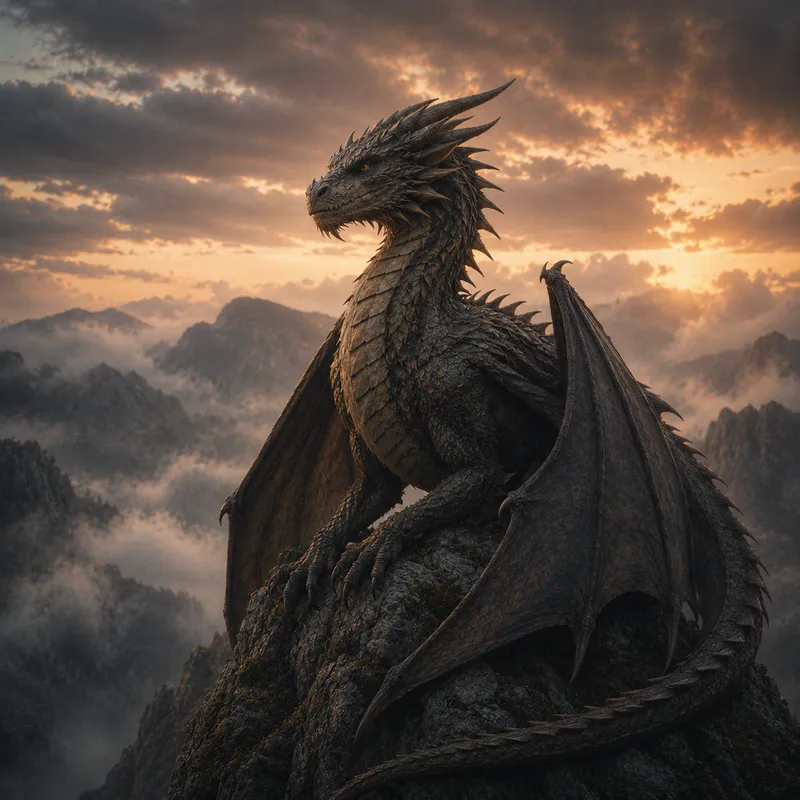
Feeling a pull toward something ancient, powerful, and untamed? You may identify as a dragon. Important and respectful note: because dragons are mythical rather than real, earthly animals, identifying as one is usually called theriomythic or otherkin — not a true theriotype. It is every bit as valid a part of the alterhuman community.
Dragon-identifying alterhumans often describe a sense of vastness, deep time, fierce independence, and a connection to elements like fire, storm, or earth. Many experience phantom wings, a tail, claws, and horns. If "dragon" resonates, you might explore the words otherkin and theriomythic alongside (or instead of) therian.
Why a Dragon Identity Is Otherkin, Not a Theriotype
In the alterhuman community, words are used carefully. A therian identifies as a real, earthly animal, one that exists or once existed in nature. A theriotype is that real animal. Dragons appear in stories, art and religion all over the world, but they aren't a biological species. So someone who identifies as a dragon is usually described as otherkin: a person who identifies as a mythical, legendary or fictional being.
You'll sometimes see the word theriomythic, which describes identifying as a mythical creature that is animal-like. Some draconic people also call themselves dragonkin. These are descriptions, not rankings. A dragon identity is no less real or valid than a wolf identity. It just has a different name, the same way "otherkin" and "therian" are neighboring words under the alterhuman umbrella.
This site includes the dragon among the theriotype guides because so many people search for it here, and because draconic alterhumans often describe experiences like phantom shifts that therians will recognize.
Dragons Across Cultures
There's no single "dragon," and that's part of why draconic identities vary so much. Dragons in different traditions are very different creatures:
- European dragons in medieval legend are often winged, four-legged, scaled and fire-breathing, sometimes guarding treasure and often cast as a challenge for a hero.
- East Asian dragons, such as the Chinese lóng, are usually long and serpentine, often wingless, and linked to water, rain and good fortune. They're often seen as wise and kind rather than monstrous.
- Norse serpents and wyrms, such as Jörmungandr, the world serpent, and Fáfnir, who became a dragon guarding gold, are tied up with fate and transformation.
- Feathered serpents in Mesoamerican traditions, like Quetzalcoatl, combine bird and snake in a revered divine figure.
Many draconic people find that one of these traditions, or a personal image that doesn't fit any of them, feels right. It's also common to feel connected to a particular element or landscape: mountains, storms, deep water, volcanoes or forests.
What Draconic People Often Describe
Because dragons aren't real animals, there's no biology to compare yourself with, and that's fine. Draconic experiences come from inner feeling, not field observation. People often describe:
- Phantom wings, tail, horns, claws or a long neck, often with a sense of great size. Learn more about these in our phantom shifts guide.
- Deep time. A feeling of being old, patient, or out of step with how fast human life moves.
- Hoarding instincts, used playfully: collecting books, stones, knowledge or memories and guarding them fondly.
- Elemental pull. Comfort in thunderstorms, by fire (safely!) or near the sea.
- Mental shifts that feel vast, proud or protective.
People understand these experiences in many ways: spiritually, psychologically, or with an honest "I don't know." Every one of those approaches is welcome, and none of them involves believing you'll physically turn into a dragon. Physical shapeshifting isn't possible, and anyone who claims to teach it is running a scam. Please don't give them money or personal information.
Dragon or a Real Animal?
Questioning draconic people sometimes discover that a real animal fits better, or that they have both. Some useful comparisons:
- Komodo dragon. Despite the name, the Komodo dragon is a real lizard from Indonesia. Someone who identifies as one is a therian with a real reptile theriotype, not otherkin.
- Dinosaurs and pterosaurs. These extinct animals were real. Identifying as one would be a paleotherian theriotype.
- Birds of prey. If your wings feel feathered and your instincts are about sharp focus and hunting, take a look at the hawk / bird of prey guide.
- Big cats. Some people drawn to a dragon's power find the solitary strength of a tiger fits better.
If you identify with a specific dragon from a particular book, game or film, rather than dragons in general, some in the community would describe that as a form of fictional otherkin identity.
Questions for Reflection
- Is your sense of being a dragon about being one, or about loving dragons as symbols? The second may be closer to being otherhearted, or simply a strong interest.
- Do your phantom sensations include scales, feathers, fur or something else entirely?
- Which culture's dragons, if any, feel most like you?
- Does the word "otherkin" feel freeing, uncomfortable, or neutral? There's no wrong answer. It's just useful to notice.
🌟 Signs the Dragon Might Be Your Theriotype
- You feel connected to something ancient, vast, or mythical
- You value fierce independence and inner power
- You feel drawn to an element (fire, storm, earth, sea)
- You experience phantom wings, tail, claws, or horns
- The word "otherkin" or "theriomythic" resonates with you
🌀 Common Shifts
Dragon-identifying people often report phantom shifts (wings, tail, horns) and powerful, expansive mental shifts. Learn more on our shifts guide & quiz.
💚 A Note on Respect
Your theriotype isn't a choice, a phase, or a costume — and only you can truly know it. A quiz like ours can point you toward animals worth reflecting on, but take your time. There's no "fake" therian and no rush. If the Dragon resonates, explore it gently through introspection, dreams, and community.
Dragon Theriotype FAQ
Can a dragon be a theriotype?
Strictly speaking, no. A theriotype is a real, earthly animal. Identifying as a dragon is usually called otherkin or theriomythic. It's an equally valid alterhuman identity with a different name.
Do dragon otherkin believe dragons are real?
Not necessarily. Most people don't claim dragons exist as animals. Draconic identity is about an inner sense of self, and people explain it in spiritual, psychological or uncertain terms.
Can I be a therian and dragon otherkin at the same time?
Yes. Some people have both a real-animal theriotype and a mythical kintype. Kintype is the broader word that covers both real and mythical identities.
Is it okay to call myself a dragon therian?
You can use whatever words feel right to you. Many in the community will gently point out that "otherkin" or "theriomythic" is the more precise term, because "therian" usually means a real animal. Knowing both helps you be understood.
Is the Komodo dragon covered here?
No. The Komodo dragon is a real monitor lizard, so identifying as one would be a true reptile theriotype. This page is about the mythical dragon.