🐯 Tiger
Type: Theriotype (real, earthly animal)
By the Inner Therian team · Last updated October 10, 2026
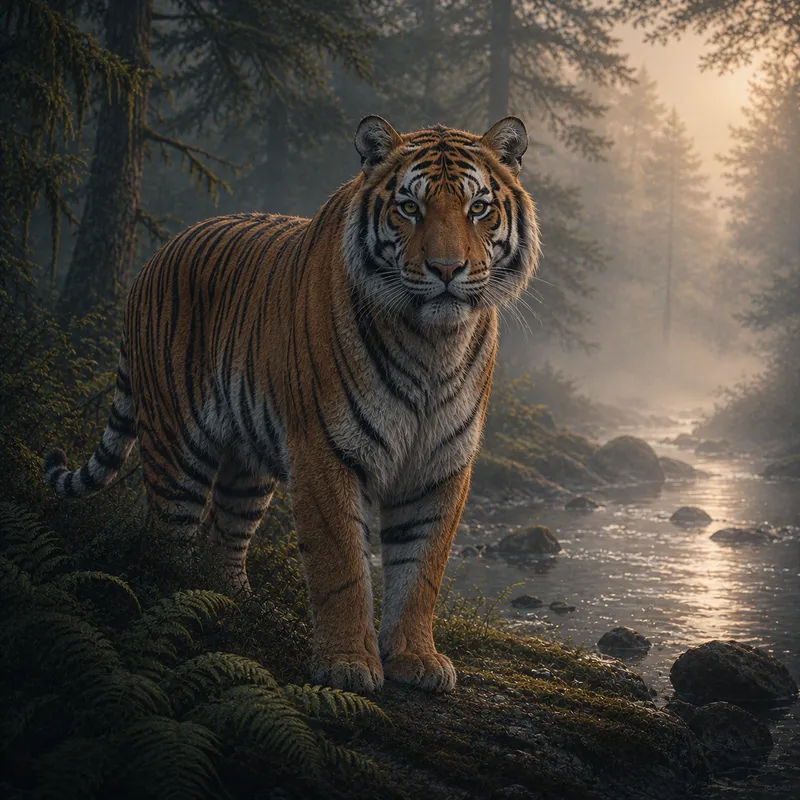
Tiger therians are solitary, powerful, and self-assured. The largest of the big cats, tigers are independent hunters — and tiger therians often describe a quiet intensity and a need to move through life on their own terms.
Tiger therians frequently feel whole on their own, with a strong sense of personal territory and focus. Unusually for cats, tigers love water, and many tiger therians feel drawn to it too. There's often a calm, contained power rather than a need to prove anything.
Tiger Facts That Shape the Theriotype
The tiger (Panthera tigris) is the largest living cat species, with the biggest individuals found among Siberian (Amur) tigers. Tigers range across a striking variety of habitats: snowy taiga in the Russian Far East, tropical forests of Southeast Asia, grasslands and dry forests of India, and the tidal mangrove swamps of the Sundarbans.
A few things set tigers apart from other big cats:
- Stripes go skin-deep. The pattern shows on the skin itself, and each tiger's stripes are unique, like a fingerprint.
- They are strong swimmers. Tigers often cool off in rivers and pools, and readily cross water while hunting or travelling.
- They hunt by ambush. A tiger relies on cover and patience, stalking close before a short, explosive rush, usually alone and often at dusk or night.
- They are friendly in their own way. Tigers greet with a soft, puffing sound called a chuff (sometimes called prusten), used between mothers and cubs and in calm encounters.
Tigers are endangered across their range, which is one reason many tiger therians feel a strong pull toward conservation and protecting wild places.
Solitude Without Loneliness
Adult tigers live alone in territories they mark with scent, scratches and urine sprays. Neighbouring tigers mostly communicate through these signals rather than meeting face to face. A mother raises her cubs on her own for around two years before they leave to find territories of their own.
Many tiger therians recognise this pattern in their own lives. The common description is not loneliness but self-sufficiency: being content in your own space, recharging alone, and keeping a few relationships that are deep rather than many that are shallow. Some describe feeling protective of "their" room, desk or route, and uneasy when it is disrupted.
That said, being comfortable alone is different from being cut off. If solitude ever stops feeling restful and starts feeling heavy, reach out to someone you trust. That's looking after yourself, not betraying your theriotype.
Common Tiger Therian Experiences
- Water as comfort. Long baths, swimming, or simply being near a river can feel unusually right.
- Stillness before action. A calm, watchful patience, then sudden focus once you commit.
- Stalking posture. During mental shifts, some notice themselves moving low and quietly, placing their feet carefully.
- Weight and power. Phantom shifts of heavy paws, a long tail used for balance, or broad shoulders.
- Chuffing. A small number of tiger therians find themselves making soft breathy greeting sounds when relaxed around people they trust.
Tiger or Another Big Cat?
Tigers share a lot with lions and leopards, but the instincts differ:
| Question | Tiger | Lion | Leopard / panther |
|---|---|---|---|
| Social life | Solitary, territorial | Lives in a pride | Solitary, secretive |
| Favourite terrain | Dense cover near water | Open grassland | Trees, rocks, shadow |
| Body feel | Very large, heavy, powerful | Large, often maned | Smaller, lithe, a climber |
Some people who feel like a tiger also feel a pull toward the bear, another large, solitary animal of forests and rivers. If both feel equally strong and steady, you might read about being a polytherian.
Myths to Leave Behind
"White tigers are a special kind of tiger." White tigers are a rare colour variant of the Bengal tiger, not a separate subspecies. Most white tigers in captivity come from inbreeding, which causes health problems. A tiger therian who feels "white" is still a tiger.
"Tiger therians are scary or violent." Real tigers avoid conflict when they can, since an injury can be serious for a solitary hunter. Tiger therians describe intensity and focus far more often than aggression, and an animal identity never justifies harming anyone.
"Tigers hate water, like house cats." The opposite is true. Tigers are among the most water-loving cats of all.
🌟 Signs the Tiger Might Be Your Theriotype
- You feel complete and strong on your own
- You have a strong sense of personal space and territory
- You feel calm, contained intensity rather than restlessness
- You're drawn to water
- You experience phantom paws, tail, or whiskers
🌀 Common Shifts
Common shifts include mental shifts toward focused, solitary headspaces and phantom shifts of paws and tail. Learn more on our shifts guide & quiz.
💚 A Note on Respect
Your theriotype isn't a choice, a phase, or a costume — and only you can truly know it. A quiz like ours can point you toward animals worth reflecting on, but take your time. There's no "fake" therian and no rush. If the Tiger resonates, explore it gently through introspection, dreams, and community.
Tiger Theriotype FAQ
Can I be a specific subspecies, like a Bengal or Siberian tiger?
Yes. Some tiger therians feel tied to a particular population and its habitat, from snowy forest to mangrove swamp. Scientists still debate how to divide tigers into subspecies (some schemes use two broad groups, mainland and Sunda island tigers, while others recognise six), but familiar names like Bengal and Amur remain in common use. Others simply feel "tiger", which is just as valid.
I am shy and quiet. Can I still be a tiger therian?
Absolutely. Real tigers are secretive animals that avoid being seen. Quiet, reserved and private people often describe a tiger identity that feels calm and inward rather than loud.
Why do I feel so drawn to water?
Tigers swim and soak more than almost any other cat, and many tiger therians report the same pull. Liking water is common among all kinds of people, though, so look at it alongside other signs rather than on its own.
How can I tell if this is identity or admiration for tigers?
Admiration looks outward ("tigers are amazing"), while identity tends to feel inward ("this is how I am"). Shifts, instincts and a sense of self that persists over months or years point toward identity. If you are unsure, the theriotype quiz and our guide to being otherhearted may help you sort through it.