🐆 Panther / Leopard
Type: Theriotype (real, earthly animal)
By the Inner Therian team · Last updated October 10, 2026
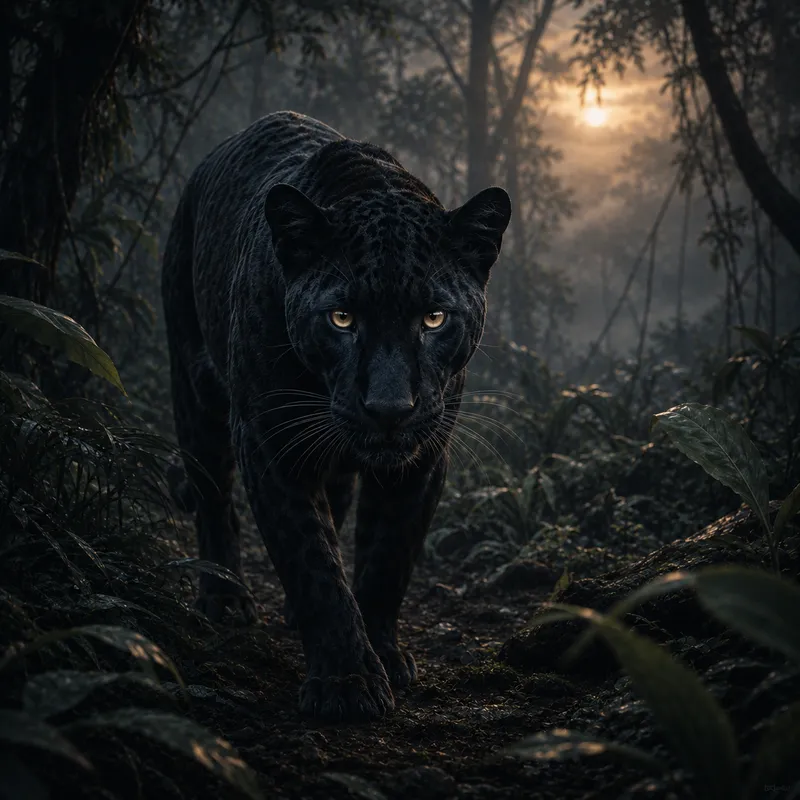
Panther and leopard therians are sleek, watchful, and self-contained. (A "panther" is usually a black leopard or jaguar.) These therians often describe a love of shadow, stillness, and moving unseen until the moment is right.
Leopard therians tend to be highly observant and private, comfortable in solitude and the dark. There's a grace and economy of movement to the panther — patient, watchful, and quietly confident. Many feel most at ease at night.
What Is a "Panther", Exactly?
"Panther" isn't a single species, which is worth knowing if you are questioning this theriotype. Depending on where you are, the word can mean:
- A black leopard (Panthera pardus) in Africa and Asia. The black coat comes from melanism, a genetic variation that produces extra dark pigment.
- A black jaguar (Panthera onca) in Central and South America, also melanistic.
- A cougar (Puma concolor) in parts of North America, as in the "Florida panther", even though cougars are tawny rather than black.
A melanistic leopard or jaguar is the same species as its spotted relatives. In the right light you can still see the rosettes beneath the dark coat. So a "black panther" therian may be a leopard therian, a jaguar therian, or someone who feels the darkness and stealth itself more than any one species. All of those are valid places to land.
Leopards and Jaguars in the Wild
Leopards have one of the widest ranges of any wild cat, across much of Africa and Asia, living everywhere from rainforest and mountains to dry scrub and the edges of cities. Their secret is adaptability and stealth. They are mostly solitary and largely nocturnal, and are famous for hauling prey up into trees to keep it away from lions and hyenas. They rest on branches during the day, draped and nearly invisible.
Jaguars are the largest cats of the Americas, stockier and more powerful than leopards. They are closely tied to water, swimming readily and hunting caimans, turtles and fish as well as land animals. Jaguars have an exceptionally strong bite for their size and often kill with a bite to the skull rather than the throat.
Both cats rely on ambush rather than chases, and both have keen night vision. Many panther therians feel connected to exactly these qualities: patience, silence and a sense of being unseen until they choose to be seen.
Panther Therians and the Night
Many panther and leopard therians describe their sense of self as strongest after dark. The experience is often less about fear of the day and more about ease: the world feels quieter, they can move without being watched, and their senses seem to sharpen.
Other experiences they commonly describe:
- Wanting to sit up high, such as on a wall, a staircase landing or a tree branch, where they can watch without being noticed.
- Moving quietly and carefully, almost without thinking about it.
- Feeling a long, balancing tail or soft, heavy forepaws during phantom shifts.
- A watchful, calm headspace in mental shifts, where listening comes before speaking.
- For jaguar therians in particular, a strong draw toward rivers, rain and humid forest.
If you love night walks, please keep safety first: tell someone where you are going, stick to places you know, and carry a phone and a light. Our safety guide has more ideas.
Panther vs Domestic Cat (and Other Big Cats)
The most common question here is whether a sleek, private, nocturnal feline self is a panther or a domestic cat. They share a lot of body language, but therians often tell them apart by:
- Size and weight. A leopard weighs many times more than a house cat, with a thick neck and powerful shoulders for carrying prey into trees. Phantom sensations often hint at which body feels like yours.
- Relationship to humans. Cat therians frequently enjoy homes and human company on their own terms. Panther therians more often describe distance from people altogether.
- What you hunt. Mice and birds versus deer and antelope, if your instincts point anywhere at all.
Compared with a tiger, a leopard is smaller, lighter and more of a climber. Compared with a lion, it is solitary rather than social.
Questions for Someone Questioning
- When you imagine your animal self, do you see a spotted coat, a black one, or are you unsure?
- Do you feel at home in trees and high places, in water, or on the ground?
- Which landscape tugs at you: African savanna, Asian forest, or South American rainforest?
- Is your love of darkness about stealth and calm, or about an aesthetic you find beautiful? Both are fine, but only one points toward identity.
- Do these feelings stay steady over months, independent of films, games or characters you enjoy?
🌟 Signs the Panther / Leopard Might Be Your Theriotype
- You're observant, private, and self-contained
- You feel at home in shadow, stillness, and the dark
- You move and act with patience and grace
- You're most comfortable at night
- You experience phantom paws, tail, or whiskers
🌀 Common Shifts
Typical shifts include sensory shifts (night focus), phantom shifts (tail, paws), and calm, watchful mental shifts. Learn more on our shifts guide & quiz.
💚 A Note on Respect
Your theriotype isn't a choice, a phase, or a costume — and only you can truly know it. A quiz like ours can point you toward animals worth reflecting on, but take your time. There's no "fake" therian and no rush. If the Panther / Leopard resonates, explore it gently through introspection, dreams, and community.
Panther / Leopard Theriotype FAQ
Is a black panther a different theriotype from a leopard?
Biologically, a black panther is usually a leopard or jaguar with a dark coat, so it is the same animal. Some therians feel the black coat is an important part of their sense of self, and that is perfectly valid. Others identify with the species and do not feel strongly about colour.
Could I be a cougar therian instead?
Possibly. Cougars are sometimes called panthers, but they are a different genus from leopards and jaguars, and they purr and scream rather than roar. If you feel a tawny, mountain-dwelling cat of the Americas rather than a spotted or black one, it may be worth reflecting on.
Are panther therians antisocial?
Not necessarily. Many describe themselves as private or reserved, much like the real solitary cats, but they still have close friendships and care deeply. Enjoying solitude is a temperament, not a flaw.
Can a panther therian also be a jaguar therian?
Some people feel the leopard and jaguar together, or feel "big spotted cat" without picking one. You might find the cladotherian page helpful if your sense of self covers a group of related animals.