🐈 Domestic Cat
Type: Theriotype (real, earthly animal)
By the Inner Therian team · Last updated October 10, 2026
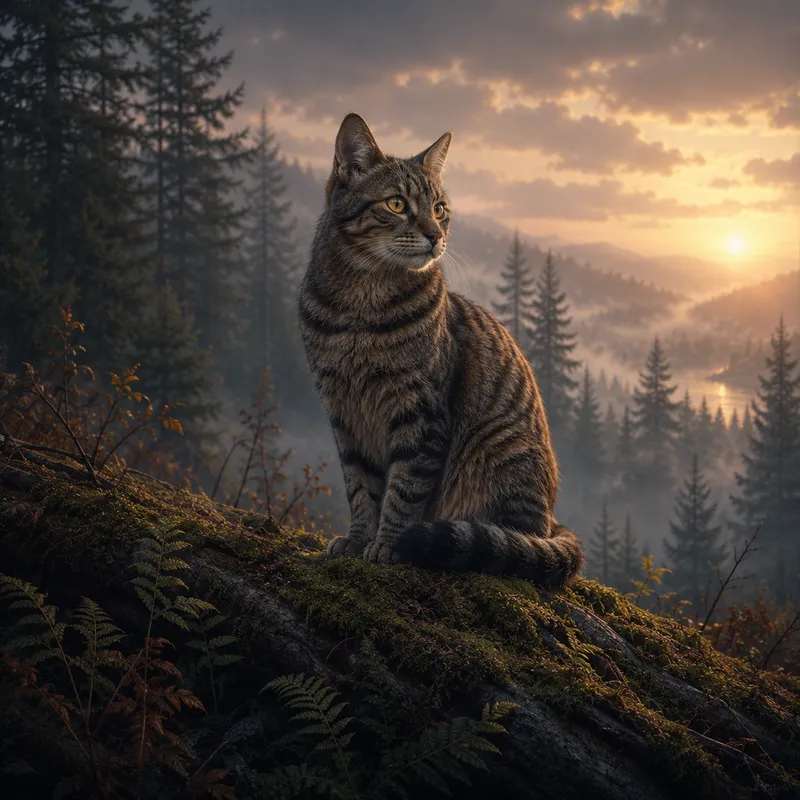
Domestic cat therians blend independence with selective affection. Cats love comfort and autonomy, bonding deeply but on their own schedule — and cat therians often describe exactly that balance of softness and self-possession.
Cat therians frequently feel a need for personal space, cozy nests, and quiet observation, alongside bursts of playful energy. Affection is real but offered on your terms. Many experience phantom whiskers, ears, and a tail, plus an instinct to curl up in warm, safe places.
A Wild Cat Who Moved In With Us
The domestic cat (Felis catus) descends mainly from the African wildcat, a small desert and grassland cat of North Africa and the Near East. Archaeology suggests cats began living alongside people roughly ten thousand years ago, around early farming settlements where grain stores attracted rodents. Cats largely domesticated themselves: they came for the mice and stayed.
That history explains a lot. Unlike dogs, cats were never bred mainly to follow instructions, and they kept much of their wildcat toolkit: solo hunting, careful territory, and a body built for ambushing small prey. Many domestic cat therians say this is exactly the blend they feel, something both tame and untamed, at home with people without belonging to them.
Senses, Sleep and Body Language
Cats are crepuscular, most active around dawn and dusk, and can see in light far dimmer than humans need. Their hearing reaches much higher frequencies than ours, well into the ultrasonic range where mice squeak. Whiskers are deeply rooted touch sensors that pick up air movement and help a cat judge gaps in the dark.
They also sleep a great deal, often twelve to sixteen hours a day, broken into many naps. And they speak with their bodies:
- Tail up on approach is a friendly greeting.
- A slow blink is widely read as a sign of relaxed trust.
- Kneading is a holdover from nursing kittenhood that many adult cats keep when content.
- Head-bunting and rubbing leave scent marks from glands on the face, a way of saying "you're part of my world".
- Meowing is mostly aimed at humans; adult cats rarely meow at one another.
Cat therians often recognise these behaviours from the inside: an urge to slow-blink at someone they trust, to knead a soft blanket, or to press their head against a loved one's shoulder.
Living as a Cat Therian
Daily life for cat therians is often described in terms of comfort, control and attention. Common threads include:
- A strong preference for choosing when contact happens. Being picked up, hugged or touched without warning can feel overwhelming, while affection you initiate feels wonderful.
- Seeking warm, enclosed or elevated spots: a sunbeam, a window seat, a blanket fort, the top bunk.
- Grooming habits or fussiness about feeling clean.
- Bursts of sudden play or energy in the evening, followed by long, deep rest.
- Watching a room from the edge before deciding whether to join in.
These may come with phantom shifts of ears, whiskers or tail, or with sensory shifts where small movements or high-pitched sounds feel suddenly sharp.
A gentle note: needing personal space is healthy, and so is communicating it. Telling friends "I like hugs when I come to you" is a very cat-like boundary, and most people appreciate knowing.
Domestic Cat or Big Cat?
It is common to wonder whether a feline sense of self belongs to a house cat or a wild cat like a panther or leopard. Some contrasts that therians find useful:
- Scale. Phantom sensations often hint at size. A domestic cat body is small and light enough to curl into a lap; a leopard's is heavy, muscular and long.
- Relationship to humans. Domestic cat therians frequently describe enjoying human company and homes. Big cat therians more often describe distance from people and a pull toward wild places.
- Prey. House cats are built to hunt mice and birds; big cats hunt deer and antelope. Some therians notice which kind of hunting instinct feels familiar.
- Feral vs pet. Some domestic cat therians feel like a feral or farm cat rather than a pampered house cat, independent and outdoors-oriented but still a Felis catus.
If you feel like cats in general, across species, reading about cladotherians may help.
Reflection Prompts
- When you picture "home", is it indoors with people nearby, or somewhere wild and unshared?
- Do you feel a pull toward kneading, slow-blinking or rubbing your head against people you trust?
- Is your need for personal space about control over touch, or about wanting to be alone entirely?
- If you feel a tail during a phantom shift, does it seem expressive and flicky, or long and heavy?
- Has this feeling stayed steady over a long stretch of time, rather than being tied to a particular cat you love?
🌟 Signs the Domestic Cat Might Be Your Theriotype
- You're affectionate, but strictly on your own terms
- You crave cozy, safe, quiet spaces
- You're a quiet observer who notices everything
- You feel phantom whiskers, ears, or a tail
- You alternate between calm and sudden playful "zoomies"
🌀 Common Shifts
Typical shifts include phantom shifts (ears, tail, whiskers) and sensory shifts toward sharper hearing and night vision focus. Learn more on our shifts guide & quiz.
💚 A Note on Respect
Your theriotype isn't a choice, a phase, or a costume — and only you can truly know it. A quiz like ours can point you toward animals worth reflecting on, but take your time. There's no "fake" therian and no rush. If the Domestic Cat resonates, explore it gently through introspection, dreams, and community.
Domestic Cat Theriotype FAQ
Is a domestic cat a "lesser" theriotype than a big cat?
No. Every theriotype is equally valid. A domestic cat is a real, earthly animal with a long, fascinating history, and identifying as one is no less meaningful than identifying as a lion or tiger.
Can I be a specific breed of cat?
Some cat therians feel drawn to a particular breed or type, such as a long-haired cat or a Siamese, while others simply feel "cat". Breeds were shaped by people, so many therians focus more on the general cat body and instincts than on a pedigree.
I love my own cat very much. Could that be what I am feeling?
Possibly, and it is worth considering honestly. Deep love for an animal can be otherhearted kinship rather than identity. Therians usually describe feeling like a cat themselves, not just feeling close to one, and that sense tends to persist regardless of any particular pet.
Is it okay to purr or meow around other people?
Many cat therians make small sounds when relaxed or shifting. It is fine to express yourself, but read the room: some places, like school or work, may not be the right setting. Expressing your theriotype should feel safe and comfortable for you.