🐾 Polytherian
Therian Types & Shifting Styles
By the Inner Therian team · Last updated October 10, 2026
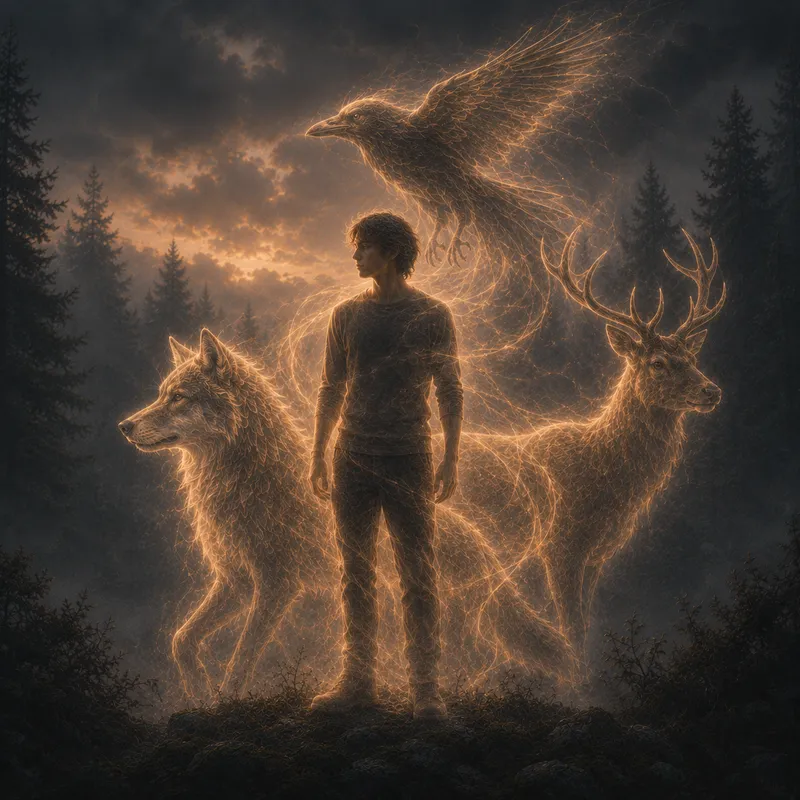
A polytherian has more than one theriotype — each a stable, genuine part of who they are.
Different animals may come forward at different times, but for a polytherian they're all authentic and lasting, not passing phases. This is different from a polymorph, whose theriotype changes over time rather than holding several at once. Explore individual animals on our theriotypes page.
How more than one theriotype can fit together
Polytherians describe a few different arrangements, and none is more "correct" than another:
- Primary and secondary. One theriotype feels central most of the time, while another is real but quieter, surfacing in certain moods or settings.
- Equal and side by side. Two or more theriotypes feel equally strong, each with its own flavour of instinct.
- Context-led. One animal comes forward in social situations and another when alone, outdoors, or under stress.
The common thread is that every theriotype is lasting. A polytherian doesn't feel that one animal has replaced another — they all remain part of who they are.
Examples of how combinations show up
Theriotypes in a polytherian don't have to be related or "make sense" together. Some illustrative pairings:
- Wolf and raven — an interesting pair, since in the wild ravens are well known for following wolf packs and feeding at their kills. A therian with both might feel a pack-minded, cooperative side alongside a curious, problem-solving one.
- Horse and hawk — a prey animal and a predator. Someone might feel a horse's alert, herd-oriented caution in crowds and a hawk's focused stillness when concentrating.
- A domestic cat and a large wild cat — two felines, but each felt individually as a distinct species rather than as "felines in general".
These are examples of the kinds of combinations people describe, not suggestions for what yours should be.
Polytherian, cladotherian or polymorph?
These three labels are about how many animals you identify as and how that holds over time. They're easy to confuse, so here's the core difference:
| Label | How many at once? | Over time |
|---|---|---|
| Polytherian | Two or more specific animals | All stay |
| Cladotherian | One whole group (e.g. all canines) | The group stays |
| Polymorph | Usually one at a time | The animal changes |
A quick test: if you feel wolf and fox and coyote and they all feel like one shared "canine-ness", cladotherian may fit. If they feel like separate animals, each distinct, polytherian is closer.
Theriotype, affinity, or kinship?
A common worry for polytherians is whether a second animal is truly a theriotype or simply an animal they love. It's worth separating a few experiences:
- Theriotype — you identify as this animal at a deep, involuntary level.
- Kinship — you feel deeply connected to the animal, like family, without being it. That's what otherhearted describes, and you can be otherhearted toward one animal while a therian of another.
- Interest — you admire or enjoy the animal, which is lovely but doesn't need a label.
There's no rush to sort every animal into a box. Some people keep a second animal in a "maybe" category for a long time, and that's an honest place to be.
Misconceptions
"Polytherians are just collecting animals." Theriotypes aren't picked for being cool or popular. Polytherians generally describe recognizing each one through the same slow self-reflection as anyone else.
"More theriotypes means more therian." One theriotype is just as valid as three. The number says nothing about how real or deep the identity is.
"If you have two, you're confused." Holding more than one stable theriotype is a well-recognized experience in the community, not a sign of indecision.
🌟 In Short
- You hold more than one theriotype
- Each theriotype is stable and lasting
- Different animal sides may surface at different times
Polytherian FAQ
How many theriotypes can a polytherian have?
There is no set limit. Most polytherians describe a small number, often two or three, but the label simply means more than one stable theriotype.
Do all my theriotypes need to be related?
No. A polytherian might be a wolf and a rabbit, or a hawk and an otter. If all of them belong to one family and feel like a single shared identity, cladotherian might describe it better.
Can one theriotype be mythical?
Yes. Some people identify as a real animal and also as a mythical creature. The real animal is a theriotype, while the mythical one falls under otherkin (sometimes described as theriomythic). Many people use both words.
Do my theriotypes shift at different times?
Often, yes. Many polytherians notice different animals surfacing in different shifts, moods, or places. Others feel them blended together. Both are common.
What if I discover another theriotype later?
That happens and is completely normal. Self-understanding grows over time. Adding a theriotype later does not mean your earlier ones were wrong.