Therian Types & Shifting Styles
Clear, respectful guides to each term. Not sure which fits you? Take the What Kind of Therian Are You? quiz, or browse the full glossary.

Contherian
Read more →
Suntherian
Read more →
Vacillant Therian
Read more →
Polytherian
Read more →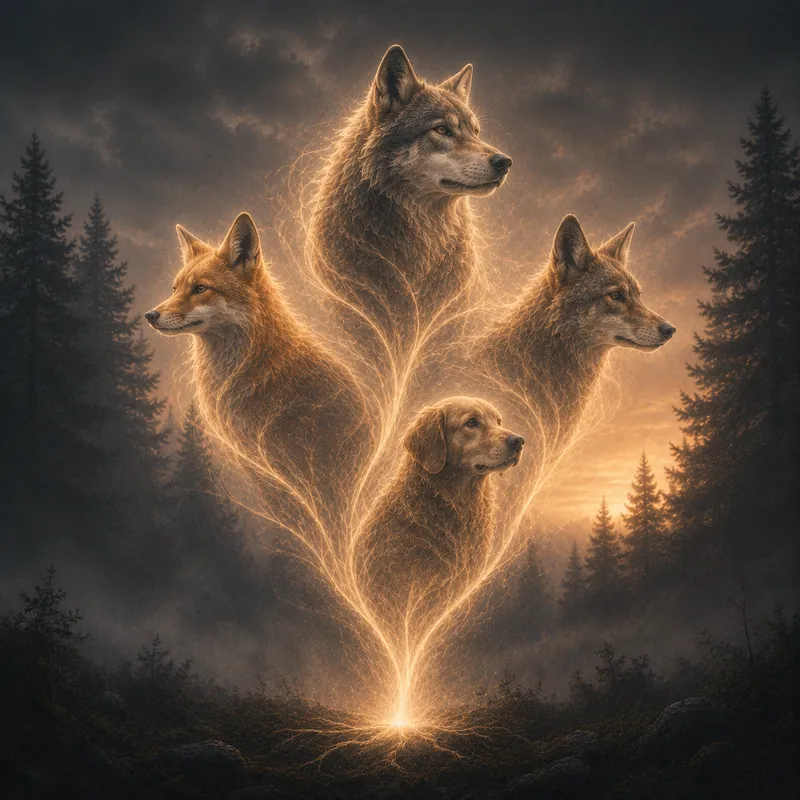
Cladotherian
Read more →
Polymorph
Read more →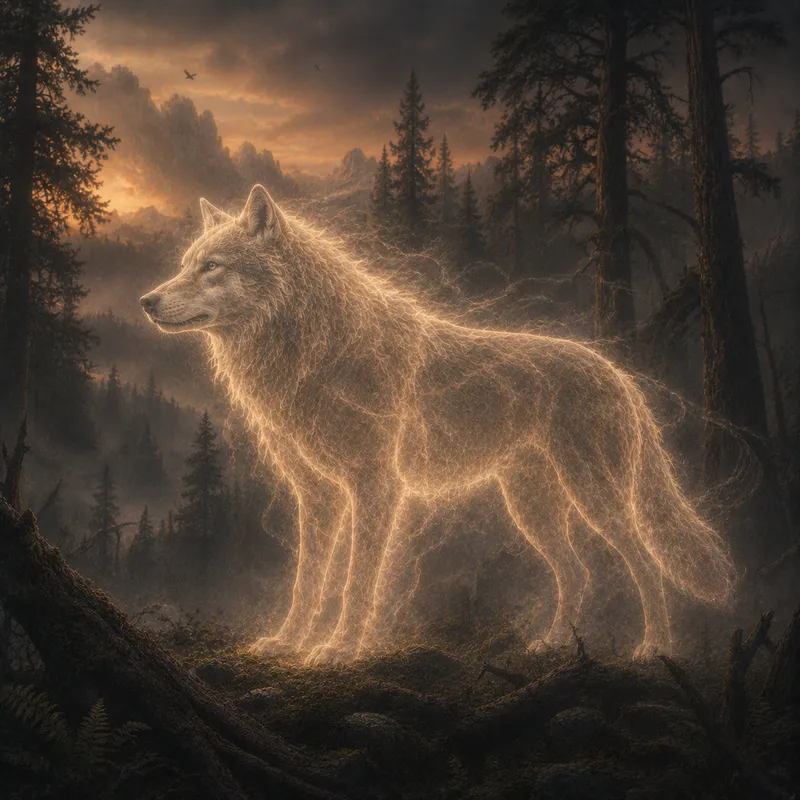
Paleotherian
Read more →
Awakening & Questioning
Read more →How these labels fit together
The terms on this page answer different questions, which is why one person can use several at once. They fall into three rough groups, plus a guide for anyone still working things out.
How your animal side shows up over time
Contherian, suntherian and vacillant describe the shape of your experience. Is the animal side constant and level? Always there but gently rising and falling? Sliding smoothly up and down a scale? These sit alongside therians who experience distinct shifts with a clear start and end.
How many animals, and whether that changes
Polytherian, cladotherian and polymorph describe your theriotypes. A polytherian has several distinct, stable theriotypes. A cladotherian identifies with a whole group of related animals, such as all canids. A polymorph's theriotype changes over the course of their life.
When your animal lived
Paleotherian simply means your theriotype is extinct — a dire wolf, a thylacine, a mammoth, a dinosaur. It can combine with any of the other labels.
So a person might be a suntherian polytherian whose theriotypes are a fox and a thylacine — which also makes them a paleotherian. That's a lot of words, and most people only use the ones they find helpful.
Quick comparison
| Label | Describes | In a sentence |
|---|---|---|
| Contherian | Shifting style | Constant, integrated, little or no shifting |
| Suntherian | Shifting style | Integrated baseline with gentle swings, no full shifts |
| Vacillant | Shifting style | Smooth, gradual movement along a human–animal scale |
| Polytherian | Theriotypes | Two or more distinct, stable theriotypes |
| Cladotherian | Theriotypes | One identity spanning a whole family or clade |
| Polymorph | Theriotypes | Theriotype changes over time |
| Paleotherian | Theriotype's era | Theriotype is an extinct animal |
Labels are tools, not requirements
None of these words is needed to be a therian. Many therians never use any of them and simply say what their theriotype is. The labels exist to make conversations easier — a shortcut for "my animal side is always there but stronger on some days" — not to sort people into ranks.
It's also normal for a label to stop fitting. If your experience changes, or you understand it better, you can drop one word and pick up another. And if you're at the very beginning, our awakening and questioning guide is a better place to start than any of the subtype pages. Once you feel settled, the What Kind of Therian quiz can help you explore which shifting style sounds most like you.
Frequently Asked Questions
Can I use more than one of these labels?
Yes. Labels from different groups combine freely — you could be a contherian cladotherian, or a vacillant paleotherian. Labels within the same group, like contherian and suntherian, usually describe one or the other, though some people sit between them.
What is the difference between polytherian and polymorph?
A polytherian holds several theriotypes at the same time, all stable. A polymorph usually has one at a time, but it changes over the years.
Are suntherian and vacillant the same thing?
They are very close, and some people treat them as interchangeable. Suntherian emphasizes an always-present baseline that swings gently; vacillant emphasizes smooth, gradual movement along a scale.
If I don’t shift, am I still a therian?
Yes. Shifting is a common experience but not a requirement. Contherians, for example, describe little or no shifting and are every bit as much therians.
Do I need to know my label before calling myself a therian?
No. Being a therian is about identifying as a real animal. Subtype labels are optional extras you can add, change or ignore whenever you like.